

The Rise of Robot Vacuums: A Comprehensive Guide
As technology continues to advance, our homes are ending up being progressively automated, making jobs simpler and more effective. Among these developments is the robot vacuum, an appliance that has actually gotten enormous popularity throughout the years. These automated cleaning devices are developed to improve home maintenance while allowing users to conserve time and effort. In this post, we will check out the functions, benefits, and distinctions between popular robot vacuums, in addition to response regularly asked concerns.
Understanding Robot Vacuums
A robot vacuum, or robovac, is a self-operating device that autonomously cleans floors. Equipped with different sensing units and advanced navigation functions, these vacuums can traverse a range of floor types, avoid obstacles, and even return to their charging stations when low on battery. The convenience offered by robot vacuums has actually made them a popular option for hectic families and people seeking to simplify their cleaning regimens.
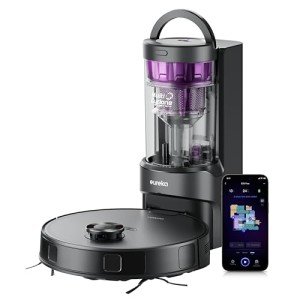
Key Features of Robot Vacuums
When picking a robot vacuum, customers will typically search for numerous crucial functions:
| Feature | Description |
|---|---|
| Navigation Technology | Consists of LIDAR mapping, cam navigation, or basic infrared sensing units |
| Suction Power | Measured in Pascals (Pa), suggests the strength of suction |
| Battery Life | Refers to for how long the vacuum can operate before needing a charge |
| Dustbin Capacity | The volume the dustbin can hold (determined in liters or milliliters) |
| Smart Connectivity | Ability to link to Wi-Fi and be controlled via a mobile phone app |
| Multi-Surface Cleaning | Ability to tidy numerous types of floors (carpet, tile, hardwood) |
| HEPA Filter | Unique filter system for trapping allergens |
| Scheduler | Enables users to set cleaning times and frequencies |
Advantages of Robot Vacuums
Robot vacuums use numerous benefits over conventional vacuum. Here are some compelling factors to think about bringing one into your home:
Time-Saving: With the capability to clean autonomously, robot vacuums allow users to participate in other activities or simply relax while the vacuum does the work.
Convenience: Most designs feature scheduling functions and mobile app connection, making it simple to handle cleaning sessions from anywhere.
Compact Design: Robot vacuums are usually smaller than conventional vacuums, allowing them to access tough locations, such as under furnishings.
Smart Features: Many robot vacuums are geared up with smart technology, enabling them to find out the layout of a home over time and tidy more efficiently.
Improved Air Quality: Models with HEPA filters can assist to record irritants and particulates, contributing to boosted air quality in the home.
Popular Robot Vacuum Models
With a huge selection of alternatives on the marketplace, consumers typically discover it challenging to select the best model for their needs. Below is a comparison of some popular good robot vacuum - www.zachariahnorthcutt.top, vacuum designs based on functionality, price, and special functions.
| Model | Price | Suction Power (Pa) | Battery Life | Dustbin Capacity (L) | Smart Features |
|---|---|---|---|---|---|
| iRobot Roomba 980 | ₤ 699 | 1700 | 120 mins | 0.6 | Wi-Fi, Alexa/Google Assistant compatibility |
| Eufy RoboVac 30C | ₤ 299 | 1500 | 100 mins | 0.6 | Wi-Fi, Remote control, Boundary strips consisted of |
| Neato Botvac D7 | ₤ 849 | 2000 | 120 mins | 0.7 | Wi-Fi, effective mapping, Zone cleaning |
| Roborock S6 | ₤ 649 | 2000 | 180 minutes | 0.48 | Wi-Fi, mopping function, customizable cleaning zones |
| Ecovacs Deebot T8 | ₤ 799 | 1500 | 240 minutes | 0.48 | Wi-Fi, mopping feature, advanced item acknowledgment |
Frequently Asked Questions about Robot Vacuums
1. How do robot vacuums avoid obstacles?
Robot vacuums utilize sensors, cams, and advanced navigation technology to spot barriers in their courses. Higher-end designs might use LIDAR innovation to draw up the space, while others may rely on infrared sensors to avoid accidents.
2. Can robot vacuums tidy carpets and carpets?
Yes, most contemporary robot vacuums are designed to clean up a range of floor types, consisting of carpets and rugs. However, suction power might vary, so it is essential to pick a model with strong suction for reliable carpet cleaning.
3. Do robot vacuums require much maintenance?
Robot vacuums are low-maintenance, however users ought to regularly clean the brushes, empty the dustbin, and replace filters to make sure ideal efficiency. The frequency of upkeep depends on usage and the kind of particles being collected.
4. How long does it consider a robot vacuum to clean up a room?
The time a robot vacuum requires to clean up a room varies based on its navigation innovation and the size of the space. Typically, it takes about 45 minutes to an hour to clean a common space.
5. Are robot vacuums loud when operating?
Robot vacuums are generally quieter than conventional vacuums. The sound level varies by model; some operate at about 55 decibels, which is approximately the noise of a normal conversation.
Robot vacuums represent a considerable step forward in home cleaning innovation, supplying benefit, efficiency, and ease of use for today's busy lifestyles. When thinking about acquiring one, it's necessary to evaluate your cleaning needs, floor types, and preferred features. By understanding the benefits and performances of different models, consumers can make educated options that boost their home cleaning experience. As these gadgets continue to evolve, it's most likely that they will end up being a much more integral part of numerous homes.












