

Unlocking the Modern Vehicle: A Comprehensive Guide to Vehicle Key Programming
The automotive market has undergone a radical change over the last 3 years. When, a car key was a simple piece of milled metal that relied completely on mechanical precision to turn a cylinder. Today, the car key is a sophisticated electronic gadget-- a mini-computer that interacts with the vehicle's internal network to authorize gain access to and engine ignition. This development has actually made car key programming an important service in the modern-day automotive landscape.
Maintaining the security of an automobile while ensuring ease of gain access to needs a deep understanding of how these electronic systems function. This guide explores the intricacies of automobile key programming, the technology behind it, and the numerous choices available to lorry owners.
The Evolution of Vehicle Security
In the early 1990s, car theft was a substantial issue for producers and insurer. The solution was the intro of the "immobilizer system." This system guarantees that a lorry's engine will not begin unless it acknowledges a special electronic code sent out from the key.

Lorry key programming is the procedure of syncing a blank transponder chip inside a key or a remote fob to a particular car's Engine Control Unit (ECU). Without this handshake in between the key and the car, the fuel system or ignition will remain disabled, rendering the car immobile even if the mechanical cut of the key matches the door locks.
Kinds Of Modern Vehicle Keys
Not all secrets are created equal. Depending on the make, model, and year of a car, the programming requirements can vary significantly.
1. Standard Transponder Keys
These appear like standard metal secrets however have a plastic head containing a small transponder chip. When inserted into the ignition, an induction coil around the ignition lock powers the chip, which then sends out a signal to the car's computer.
2. Remote Head Keys
These combine the transponder chip with remote entry buttons (lock, unlock, trunk release). The programming for these keys frequently includes 2 steps: one for the immobilizer and one for the remote functions.
3. Keyless Entry Fobs and Smart Keys
Typical in modern-day automobiles with push-to-start buttons, these "distance secrets" communicate with the car via radio frequencies. The car finds the key's presence when the driver neighbors, permitting hands-free entry and ignition.
4. Flip Keys (Switchblade Keys)
These include a mechanical key blade that folds into a remote real estate. Like remote head secrets, they include complex circuitry that needs specialized programming.
Key Type Comparison Table
| Key Type | Primary Security Feature | Programming Complexity | Common Use Era |
|---|---|---|---|
| Mechanical Key | Physical cuts just | None | Pre-1995 |
| Transponder Key | RFID Chip | Moderate | 1995-- Present |
| Remote Head Key | RFID + RF Remote | Moderate to High | 2000-- Present |
| Smart/Proximity Key | Rolling Code Frequency | High | 2010-- Present |
| Digital Key (App) | Encrypted Bluetooth/NFC | Very High | 2020-- Present |
How Vehicle Key Programming Works
The programming procedure is essentially a "digital handshake." When an expert programs a key, they are either adding a brand-new unique ID to the car's "authorized list" or cloning an existing ID onto a brand-new chip.
The OBD-II Port Method
The majority of modern programming is done through the On-Board Diagnostics (OBD-II) port, situated under the dashboard. A specialist connects a specific programming tool to this port to access the vehicle's ECU. The tool then instructs the car to enter "learning mode," enabling it to accept the signal from the brand-new key.
EEPROM Programming
In some high-security vehicles (especially European brand names like BMW, Mercedes-Benz, or Audi), the standard OBD-II technique may not suffice. In these cases, technicians should perform EEPROM (Electrically Erasable Programmable Read-Only Memory) programming. This includes eliminating a specific module from the car, reading the information straight from the circuit board chip, and writing the key info into the memory.
On-Board Programming (OBP)
Certain older domestic designs enable a manual programming sequence. This might include a particular pattern of turning the ignition on and off, opening doors, or pushing buttons in a particular order. Nevertheless, producers are moving away from this method to improve security.
The Role of the Automotive Locksmith vs. The Dealership
When a driver loses a key or needs a spare, they normally have two choices: a car dealership or a specialized automobile locksmith professional.
The Dealership Experience
Dealers have direct access to producer databases and proprietary software. While this ensures a high level of accuracy, it frequently includes a premium cost and the requirement that the lorry be towed to their location.
The Automotive Locksmith Experience
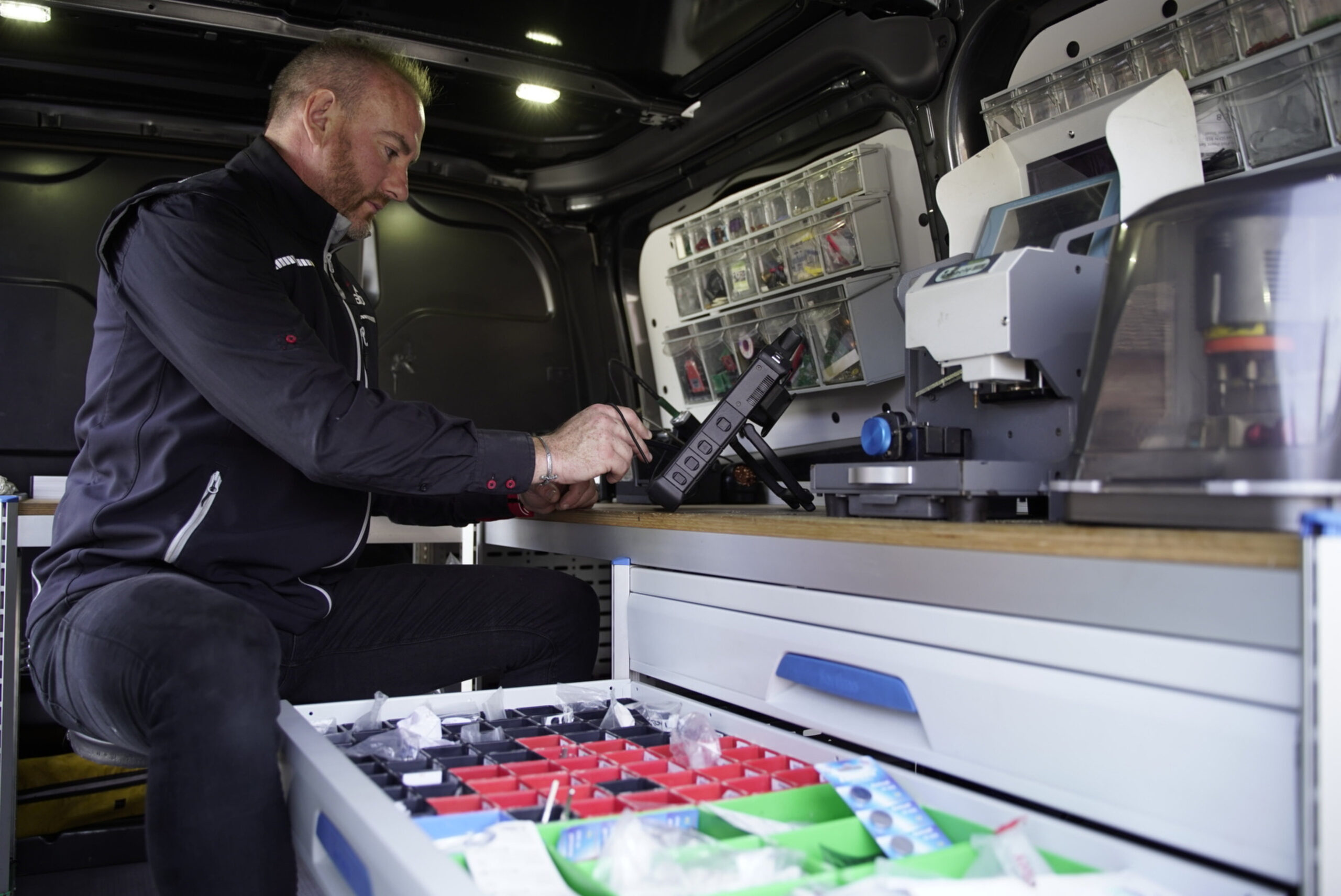
Modern locksmith professionals make use of sophisticated aftermarket tools that can program keys for a large range of makes and designs. They are generally mobile, indicating they can pertain to the stranded driver's location, saving on pulling costs.
Contrast: Service Providers
| Feature | Dealer | Automotive Locksmith | DIY Programming |
|---|---|---|---|
| Expense | High | Moderate | Low |
| Convenience | Low (Requires towing) | High (Mobile service) | High (At home) |
| Equipment | OEM Proprietary | Multi-brand Diagnostic Tools | Standard OBD Dongles (Limited) |
| Success Rate | 100% (for their brand) | Very High | Variable |
| Wait Time | Hours to Days | Normally <<1 Hour Variable Why Professional Programming |
is Essential While some"universal "key packages are sold
online for DIY enthusiasts, expert programming is normally advised for a number of factors: Security Risk: Incorrectly attempting to configure a key can in some cases
to bypass. Accessibility of an Original Key
: It is considerably cheaper to replicate a key if an existing"master key"is
- present. If all keys are lost, the professional needs to"flash"the system, which is more labor-intensive.
- Key Technology: An easy transponder key is much cheaper than a wise proximity fob with remote start abilities. Geography: Labor rates for automobile service technicians differ by area and the time of day (emergency after-hours
- services cost more). Typical Troubleshooting Tips Keys can fail for different reasons. Before looking for a full replacement, think about these points: Battery Replacement: Smart secrets and remotes count on small coin-cell batteries(like the CR2032). If the remote does not work but the car starts when the fob is held against the start button, it is most likely simply a dead battery. Signal Interference: Large metal items or high-frequency electronic devices near thekey can in some cases block the signal. System Resets: Sometimes, a car's computer might "forget" a key during a deep battery drain. Re-syncing might be required. Regularly Asked Questions( FAQ)1. Can I set a car key myself?
- This depends upon the vehicle. Some older Ford, GM, and Chrysler designs allow on-board programming if you have two existing working secrets. However, for a lot of modern vehicles(2010+), specialized diagnostic equipment is needed. 2. For how long does it require to program a key? Most of the times, the
programming itself takes between 15 to 30 minutes. Nevertheless, if the locksmith requires to
originate a key (when all secrets are lost )or carry out EEPROM work, it can take an hour or more. 3. What details do I need to offer the developer? The service technician will require the automobile's Year, Make, and Model, the Vehicle Identification Number(
VIN ), and evidence of ownership (Registration or Title)together with a legitimate ID. 4. Can a"used "key from another car be reprogrammed? Normally, no. The majority of transponder chips and clever keys are"locked" to a lorry when programmed. While some particular types can be" opened
"utilizing specialized tools, it is usually more economical to buy a
new, virgin key. 5. Does insurance cover key programming? Some thorough insurance coverage policies or roadside assistance programs (like AAA) deal "Key Replacement
" riders that cover part or all of the cost of a brand-new key and programming. Vehicle key programming is a best example of how technology has actually enhanced our day-to-day lives while including layers of intricacy. While the days of getting a spare key cut for a couple of dollars at a hardware store are mostly gone, the advanced systems that changed them offer unmatched security. Whether a chauffeur is wanting to add an extra key for comfort or is facing an" all keys lost "emergency, understanding the tools, costs, and procedures included
is necessary for any contemporary lorry owner. Getting professional service ensures that the vehicle stays protected, functional, and ready for the roadway.












